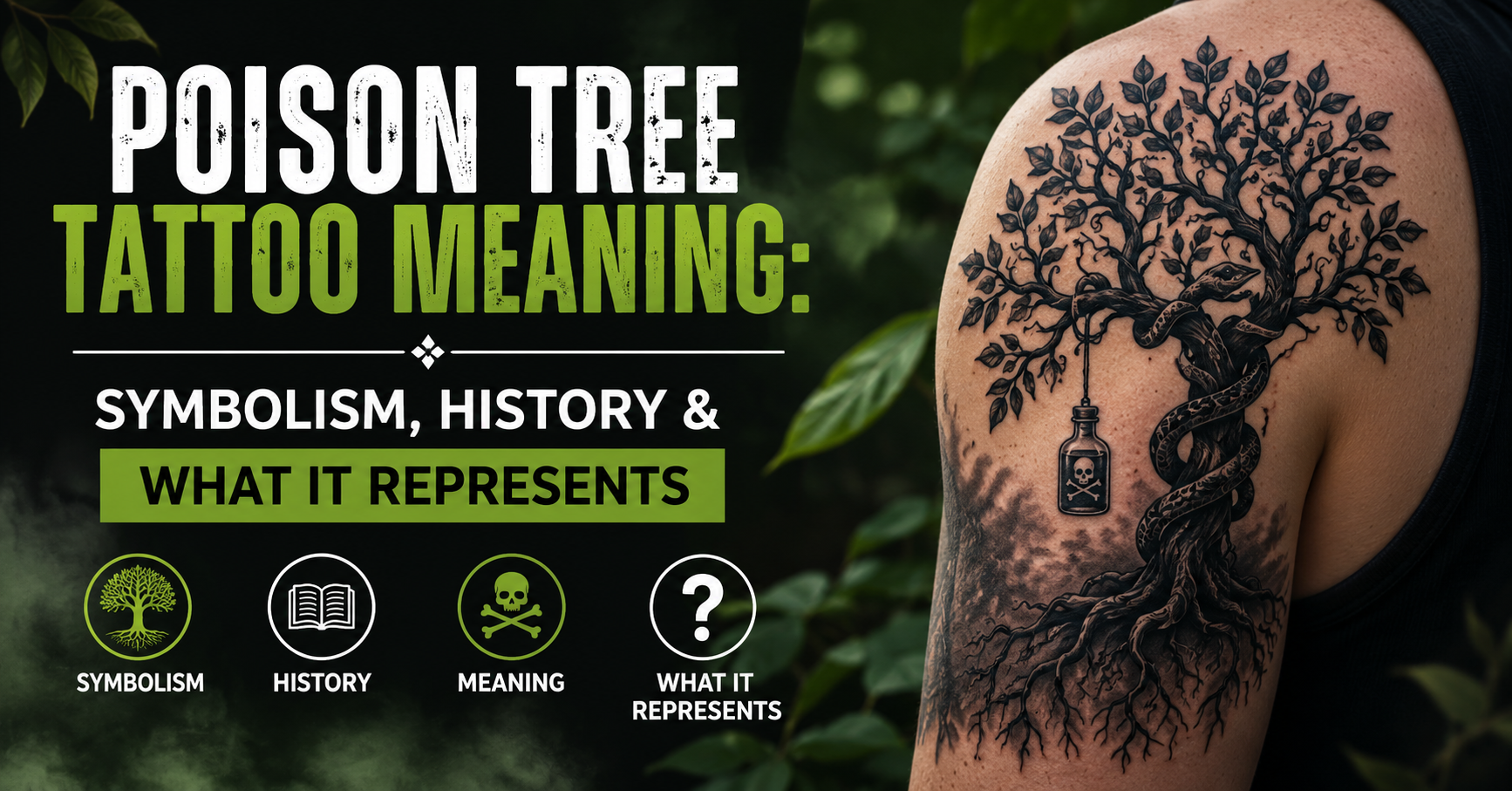
Poison tree tattoos catch the eye right away. They look dark and mysterious. Many people choose this design to show hidden feelings. It often points to danger wrapped in beauty.This tattoo style comes from old stories and poems. William Blake wrote a famous poem called “A Poison Tree.” It talks about anger that grows if we hide it. Tattoo lovers still connect with this deep idea today.The design means different things to different people. Some see it as a warning sign. Others use it to express pain turned into strength. It can also show how something harmful can still look attractive on the outside
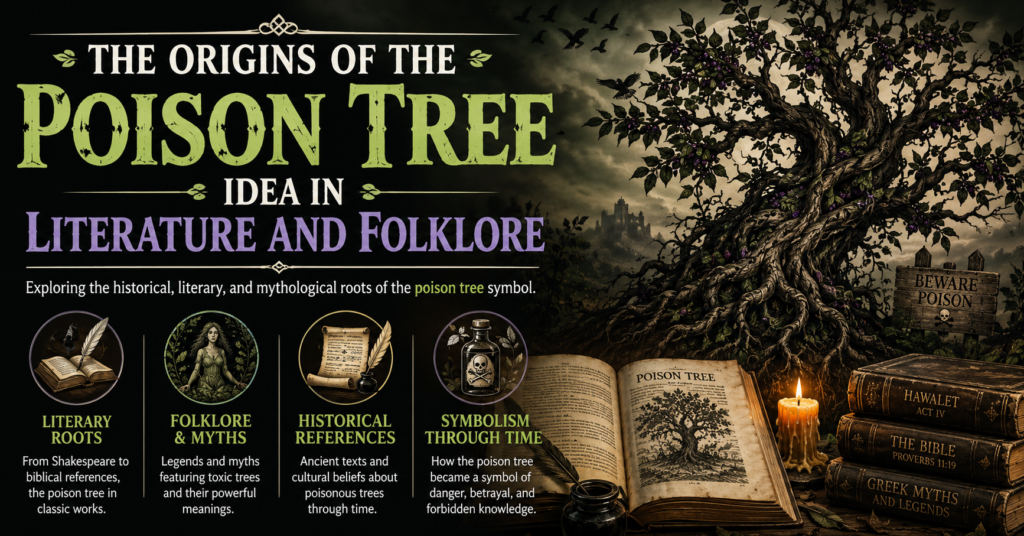
The Origins of the “Poison Tree” Idea in Literature and Folklore
The poison tree symbol didn’t start in a tattoo shop. It grew out of centuries of storytelling. Old folklore often used trees to represent hidden danger dressed up as beauty. A tree that looks lush on the outside but hides something harmful underneath is a very old warning sign.Religious and mythological stories add another layer. The Tree of Knowledge in Genesis, with its forbidden fruit, shaped how many cultures picture a “dangerous” tree. Medicine and folk tales also used poisonous plants as metaphors for temptation and consequence.By the time tattoo culture picked up the image, it already carried centuries of meaning. That’s part of why the design feels so loaded, even to people who don’t know the full backstory.
William Blake’s “A Poison Tree” and Its Lasting Influence
Most modern interpretations trace back to one source: William Blake’s 1794 poem “A Poison Tree.” In it, Blake describes anger toward a friend that he speaks about and lets go of, compared to anger toward a foe that he hides and lets grow.That hidden anger becomes a literal tree. It grows an apple, and the poem ends in betrayal and quiet revenge. The message is simple but sharp: emotions we refuse to express don’t disappear. They take root.This idea influenced tattoo enthusiasts long after the poem was written. Many people connect the design directly to Blake’s words, even without quoting them. The tattoo becomes a personal reminder to speak honestly instead of letting resentment build in secret.
Poison Tree vs. Tree of Life: Two Opposite Meanings
Both designs use a tree as the central image, but they tell very different stories. Knowing the difference helps you pick the right symbol for what you actually want to say.
| Feature | Poison Tree Tattoo | Tree of Life Tattoo |
|---|---|---|
| Core meaning | Hidden anger, betrayal, inner conflict | Growth, family, connection, renewal |
| Common fruit/detail | Single glowing or dark apple | Full, healthy branches and roots |
| Mood | Dark, mysterious, cautionary | Warm, hopeful, grounding |
| Typical wearer intent | Processing pain or a past grudge | Celebrating heritage or new beginnings |
| Visual style | Twisted, sparse, shadowed | Balanced, symmetrical, often colorful |
Some people even combine both ideas in one piece, showing one side of the tree cracked and dark, and the other side green and thriving.
Common Design Styles for Poison Tree Tattoos
There isn’t one “correct” way to draw a poison tree. Artists and clients tend to lean toward a few recognizable styles:
- Blackwork Poison Tree – Bold black lines, thick branches, heavy shading. Popular for a striking, high-contrast look.
- Blake-Inspired Design – A twisted, almost serpentine trunk with sparse leaves and one glowing apple, drawn close to the original 1794 illustration.
- Half Dead, Half Alive Tree – One side barren and cracked, the other green and full. This shifts the meaning toward healing rather than only pain.
- Tree with Serpent – A snake coiled around the trunk, pulling the design closer to its Genesis and forbidden-fruit roots.
- Minimalist Line Tree – Simple, single-line branches with no shading, often chosen for a subtle, quiet statement piece.
- Gothic Detailed Tree – Thorns, crows, or fog worked into the background for a heavier, more dramatic tone.
What the Apples (or Fruit) on the Tree Represent
The fruit is often the most important detail on a poison tree tattoo. In Blake’s poem, the apple is the anger itself, grown in secret and offered as bait.
A single glowing apple usually represents a specific grudge, secret, or unresolved conflict. Multiple apples can suggest repeated patterns of suppressed emotion, or several unresolved issues carried at once. Some wearers choose a rotten or dark fruit to show how negativity spoils something that once looked appealing.
Not everyone reads the fruit as purely negative, though. For some, it marks the exact moment they recognized a toxic pattern, which makes it a turning point rather than just a warning.
Roots, Branches, and Leaves: Reading the Details
Every part of the tree can carry its own meaning, which is part of why this tattoo feels so personal to design.
- Roots – Often stand for where the anger or hurt began, sometimes tied to family, a relationship, or an old memory.
- Branches – Represent how the feeling spread or grew over time, especially when drawn twisting or tangled.
- Leaves – Full, healthy leaves can suggest resilience, while sparse or falling leaves often point to loss or decay.
- Bark texture – Rough, cracked bark is frequently used to show emotional damage or hardship already survived.
- Thorns – Added for a sharper warning, hinting at self-protection or boundaries after being hurt before.
Color Choices and What They Add to the Meaning
Color choice changes the tone of a poison tree tattoo more than people expect.
- Black and grey – The most common choice. It keeps the design moody, timeless, and slightly ominous.
- Deep green – Adds a natural, grounded feel, softening the darker symbolism slightly.
- Red accents – Often used on the fruit or a few leaves to highlight anger, passion, or danger.
- Purple or violet tones – Associated with mystery, spirituality, or emotional depth.
- Glowing yellow-green fruit – A nod to the “poison” itself, drawing the eye straight to the apple as the focal point.
Most people keep the palette limited. A single accent color on an otherwise black-and-grey tree tends to read as more intentional than a fully colorful piece.
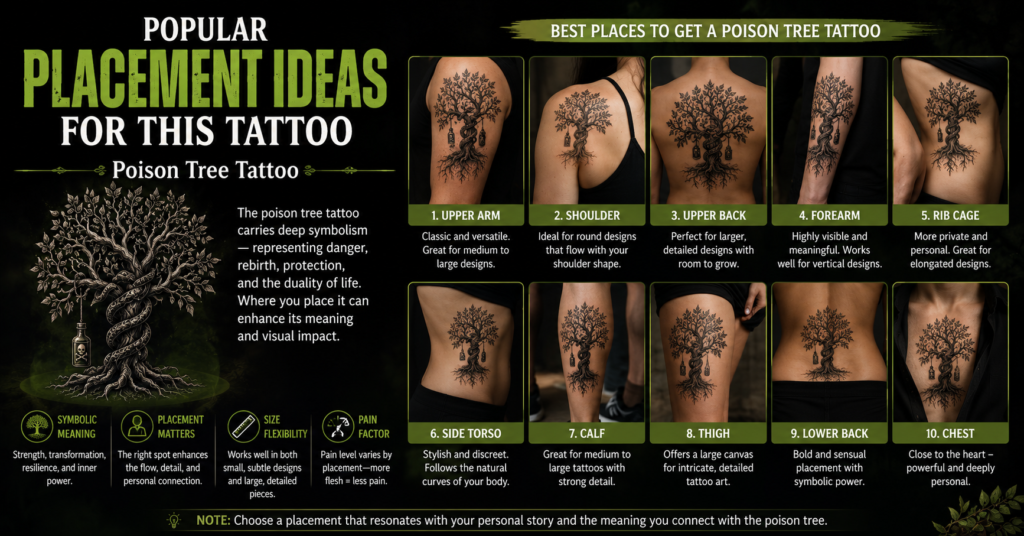
Popular Placement Ideas for This Tattoo
Placement affects both the visual impact and how personal or visible the tattoo feels.
- Forearm – Easy to see, popular for smaller or line-style versions.
- Upper arm or shoulder – Gives room for a fuller tree with branches and roots.
- Back or spine – Chosen for larger, more detailed pieces meant to unfold like a story.
- Ribcage – A more private spot, often picked for deeply personal or emotional pieces.
- Thigh – Offers a large canvas while staying easy to cover when needed.
- Ankle or wrist – Common for minimalist, single-line versions of the design.
Poison Tree Tattoos in Pop Culture and Media
Blake’s poem has been referenced in music, literature, and film for decades, which keeps the symbol alive outside of tattoo culture. Song lyrics, book titles, and TV episode names have borrowed the phrase “poison tree” to hint at buried resentment or slow-building betrayal.
That steady presence in pop culture is part of why the image still feels fresh to new generations. People discover the poem through a song or a show, then connect it to their own experience before deciding to wear it permanently.
Who Typically Gets a Poison Tree Tattoo and Why
This design tends to attract people who have lived through something specific, not just anyone looking for a nature tattoo. Common reasons include:
- Processing anger toward someone they never confronted directly
- Marking recovery from a toxic relationship or environment
- Honoring a period of personal growth after holding in emotions
- A love of literature, especially Blake’s poem specifically
- Wanting a visual reminder to speak honestly instead of letting things fester
Among men, the design often leans toward control and restraint, shown through bold blackwork and thicker branches. Among women, softer linework and a “healing” version of the tree, like the half-dead, half-alive style, tends to be more common. Neither approach is a rule, just a general trend.
Things to Consider Before Getting One
A poison tree tattoo is meaningful, but it’s still worth planning carefully before booking an appointment.
- Size and detail – Roots, bark texture, and fruit detail need enough space to actually read clearly on skin.
- Placement and visibility – Decide whether this is a private piece or one you want others to ask about.
- Style match – Look at an artist’s portfolio to confirm they can handle blackwork, linework, or detailed shading, whichever fits your idea.
- Personal meaning – Be clear with yourself on what the tree represents for you before it becomes permanent.
- Longevity – Fine linework fades faster than bold blackwork, so consider how the design will age over the years.
Conclusion
A poison tree tattoo carries far more weight than its quiet, simple look suggests. Rooted in William Blake’s 1794 poem and older tree symbolism from folklore and religion, it speaks to anger left unspoken, the damage that silence can cause, and the growth that comes from finally facing it. Whether you choose a bold blackwork tree, a single glowing apple, or a half-dead, half-alive design, the meaning ultimately comes down to your own story. Take time to choose the details, the placement, and the artist that best represent what you want this tattoo to say.
Frequently Asked Questions
What does a poison tree tattoo symbolize?
It typically represents suppressed anger, hidden emotions, betrayal, or personal growth after holding in negative feelings.
Where does the poison tree symbol come from?
It’s mainly rooted in William Blake’s 1794 poem “A Poison Tree,” along with older tree symbolism from folklore and religion.
Does a poison tree tattoo always have a negative meaning?
Not always. Many wearers use it to represent healing, resilience, or lessons learned rather than only pain.
What’s the best placement for a poison tree tattoo?
It depends on size and detail. Forearms and shoulders suit smaller pieces, while the back or thigh works better for larger, detailed trees.
Can I add color to a poison tree tattoo?
Yes. Black and grey is most common, but small accents like red or glowing yellow-green on the fruit are popular too.
Is this tattoo based on a real poisonous tree?
No. It’s a symbolic design based on literature and folklore, not a tattoo of an actual toxic plant species.
Leave a Comment
Have your own poison tree tattoo or planning one? Share what it means to you in the comments below.