DEI Meaning: What Does DEI Stand For? Definition & Examples
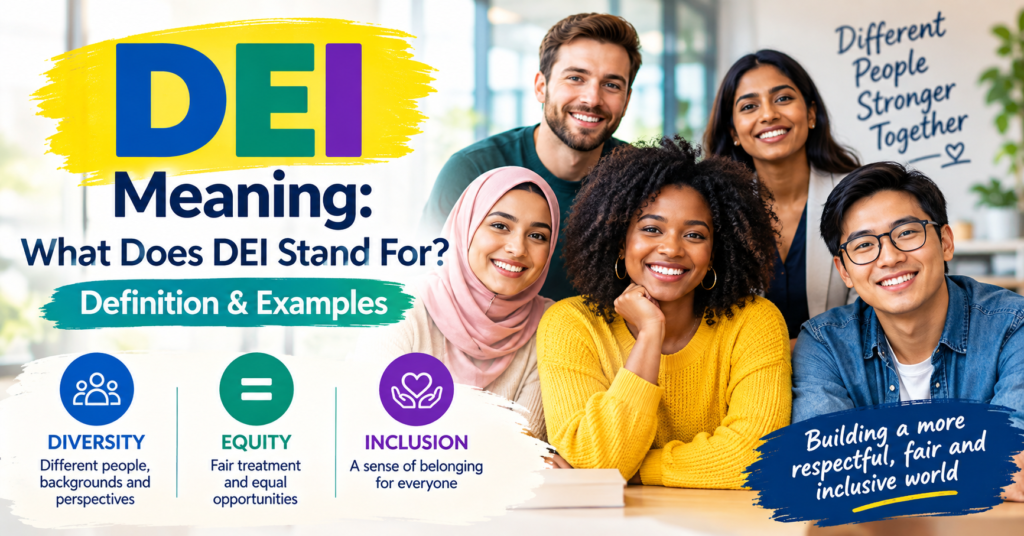
DEI stands for Diversity, Equity, and Inclusion. It is a term used by companies, schools, and organizations. The goal is to make sure everyone feels welcome and treated fairly. DEI has become a common topic in workplaces around the world.Many people hear this word but do not know what it truly means. Diversity means having people from different backgrounds. Equity means giving people fair access to opportunities. Inclusion means making sure everyone feels like they belong.Understanding DEI is important in today’s world. It helps groups work better together and respect each other’s differences. Companies use DEI to build stronger teams and better environments. In this article, we will explain the true meaning of DEI in simple words.
What Does DEI Mean in Simple Words?
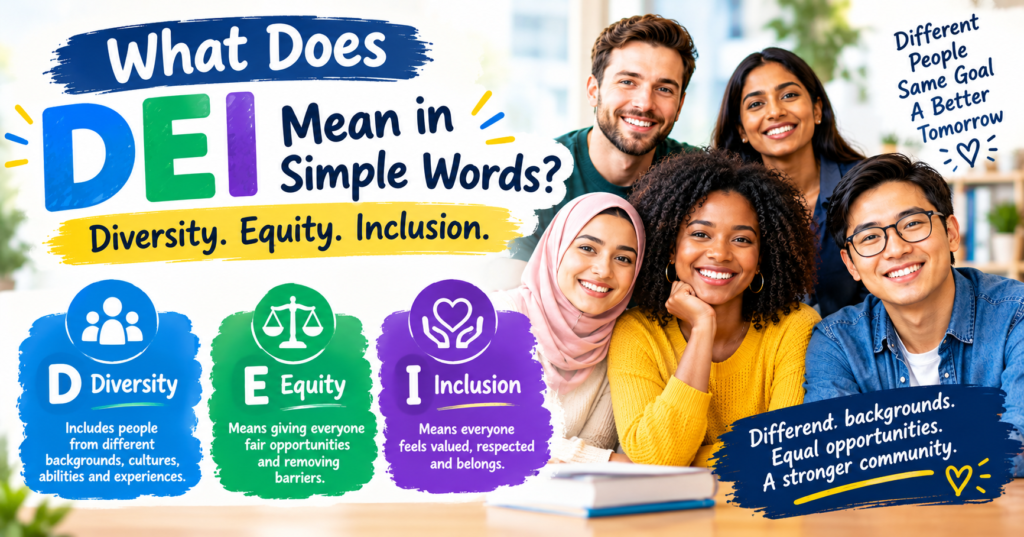
In simple words, DEI is a short way to describe an approach that tries to give everyone a fair chance, no matter their background. It is not one single rule or law. It is a set of values that guide how people, schools, and companies treat one another.
Think of DEI as a three-legged stool. Each leg supports the others:
- Diversity brings different people into the room.
- Equity makes sure everyone has fair access to tools and opportunities.
- Inclusion makes sure every person actually feels welcome once they are there.
If one leg is missing, the whole idea falls apart. A group can be diverse but not inclusive, or it can talk about equity without ever practicing it.
What Does DEI Stand For?
DEI stands for Diversity, Equity, and Inclusion. Here is a quick breakdown of each word:
| Term | Simple Meaning | Main Focus |
|---|---|---|
| Diversity | Having people from different backgrounds, cultures, and identities | Representation |
| Equity | Giving people fair access based on their needs | Fairness in outcomes |
| Inclusion | Making people feel valued, heard, and respected | Belonging |
Diversity
Diversity means the presence of people with different traits. This can include race, gender, age, religion, disability, sexual orientation, and life experience. A diverse team simply has a mix of different kinds of people.
Equity
Equity is often confused with equality, but they are not the same. Equality means giving everyone the same thing. Equity means giving people what they specifically need to reach a fair outcome. For example, a wheelchair ramp does not help everyone equally, but it gives equitable access to someone who needs it.
Inclusion
Inclusion is about culture and behavior. It asks whether people are actually invited to speak up, share ideas, and take part in decisions, not just present in the building.
DEI Meaning in the Workplace
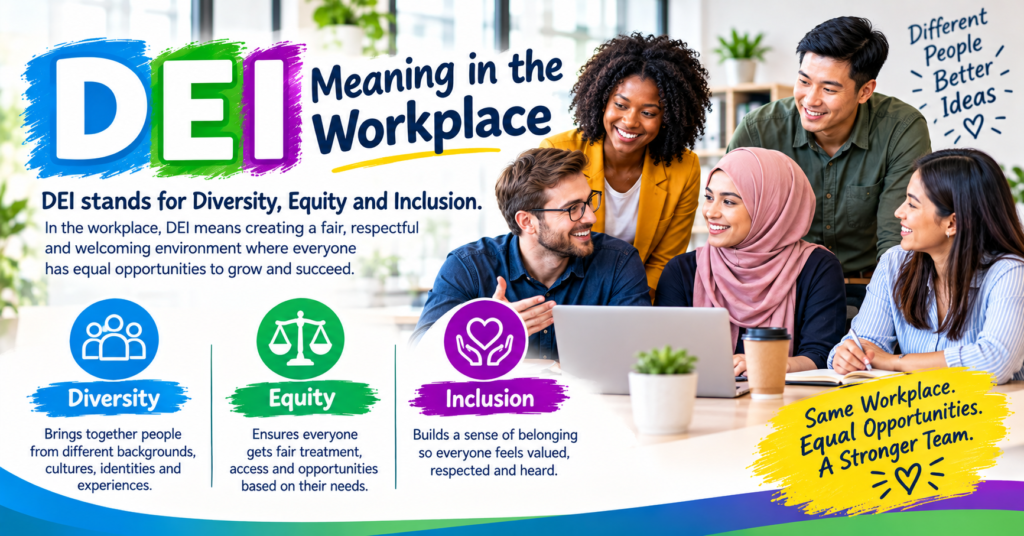
In a work setting, DEI meaning refers to how a company builds its teams, culture, and policies. A workplace that takes DEI seriously usually focuses on:
- Hiring people from a wide range of backgrounds
- Paying employees fairly for the same roles and experience
- Offering equal opportunities for promotions and leadership roles
- Creating a culture where employees feel safe sharing opinions
- Providing accommodations for employees with disabilities
Many companies also run DEI training sessions, employee resource groups, and mentorship programs to support this goal.
DEI Meaning in Education
Schools and universities also use DEI principles. In education, this can look like:
- Scholarship programs for underrepresented students
- Classroom materials that reflect different cultures and histories
- Support services for students with disabilities
- Anti-bullying and anti-discrimination policies
- Mentorship programs for first-generation college students
The goal in education is simple: every student should have a fair shot at learning and succeeding, regardless of their background.
DEI Meaning in Business
At a business level, DEI is often tied to company strategy, not just HR policy. Businesses use DEI to:
- Build teams that reflect their customer base
- Reduce bias in hiring and promotion decisions
- Strengthen brand reputation with employees and customers
- Improve innovation through varied perspectives
- Meet reporting standards for investors who track diversity metrics
Some businesses combine DEI with other frameworks, such as ESG (Environmental, Social, and Governance), since both relate to responsible business practices.
Why Is DEI Important?
DEI matters because people work and learn better when they feel respected and fairly treated. Here are the main reasons organizations care about it:
- Better decision-making: Teams with different viewpoints tend to spot problems others miss.
- Higher employee satisfaction: People are more likely to stay at a company where they feel valued.
- Stronger reputation: Customers and job seekers often prefer organizations known for fair treatment.
- Legal and ethical responsibility: Many DEI principles connect back to long-standing anti-discrimination laws.
- Wider talent pool: Companies that welcome different backgrounds can choose from more qualified candidates.
Examples of DEI in Everyday Life
DEI is not just a corporate idea. It shows up in daily life in small and large ways, such as:
- A restaurant offering menus in braille for visually impaired guests
- A neighborhood event that includes food and music from many cultures
- A public building with ramps and elevators for accessibility
- A community center offering free classes to low-income families
- A sports team welcoming players of all skill levels and backgrounds
DEI in the Workplace: Common Examples
Here are some concrete ways DEI shows up inside real companies:
| Example | What It Looks Like |
|---|---|
| Flexible work hours | Allowing parents or caregivers to adjust schedules |
| Salary transparency | Publishing pay ranges to reduce pay gaps |
| Employee resource groups | Voluntary groups for women, veterans, LGBTQ+ staff, etc. |
| Accessible offices | Ramps, adjustable desks, screen readers |
| Bias-reduction training | Teaching hiring managers to review resumes fairly |
| Parental leave policies | Equal leave options for all types of parents |
Benefits of Diversity, Equity, and Inclusion
Organizations that put real effort into DEI often report several benefits:
- Improved creativity – Different perspectives lead to more creative solutions.
- Higher retention – Employees stay longer when they feel included.
- Better teamwork – Trust grows when people feel respected.
- Stronger community ties – Businesses connect better with diverse customer bases.
- Lower legal risk – Clear equity policies help avoid discrimination claims.
DEI vs Diversity: What’s the Difference?
People often use “DEI” and “diversity” as if they mean the same thing, but they are not identical.
| Diversity Alone | Full DEI Approach |
|---|---|
| Focuses only on who is present | Focuses on who is present, treated fairly, and feels welcome |
| Can exist without real change | Requires ongoing action and policy |
| Measures representation | Measures representation, fairness, and belonging |
| A snapshot | An ongoing process |
In short, diversity is just one part of DEI. A company can hire a diverse team and still fail at equity or inclusion if people are not treated fairly or do not feel like they belong.
Common Misunderstandings About DEI
Because DEI is a hot topic, several myths have spread around it. Here are a few common ones, along with the facts:
- Myth: DEI means hiring quotas. Fact: Hiring quotas based on protected traits are illegal in many places. DEI focuses on removing bias, not forcing numbers.
- Myth: DEI only benefits minority groups. Fact: DEI policies like flexible schedules, accessibility tools, and fair pay practices benefit everyone, including majority groups.
- Myth: DEI lowers standards. Fact: DEI aims to remove unfair barriers so qualified people are not overlooked, not to reduce qualification requirements.
- Myth: DEI is only political. Fact: While DEI is discussed in politics, it is rooted in workplace fairness and long-standing anti-discrimination principles.
Conclusion
The DEI meaning comes down to three simple ideas: welcome different people, treat them fairly, and make sure they truly belong. Whether it appears in a workplace, a classroom, or a local business, the goal stays the same — building environments where everyone has a real chance to succeed. As conversations around DEI continue to evolve, understanding its true meaning helps you form your own informed opinion, rather than relying on headlines alone.
Frequently Asked Questions About DEI Meaning
What does DEI stand for?
DEI stands for Diversity, Equity, and Inclusion, a framework used to promote fair treatment for all people.
What does DEI mean in the workplace?
In the workplace, DEI means building fair hiring practices, equal pay, and an inclusive culture where every employee feels valued.
Why is DEI important?
DEI is important because it helps organizations make better decisions, retain employees, and build fair, respectful environments.
What are some examples of DEI?
Examples include accessible buildings, fair pay policies, employee resource groups, and flexible work arrangements for different needs.