FOMO Meaning: What Does FOMO Stand For? Definition & Examples
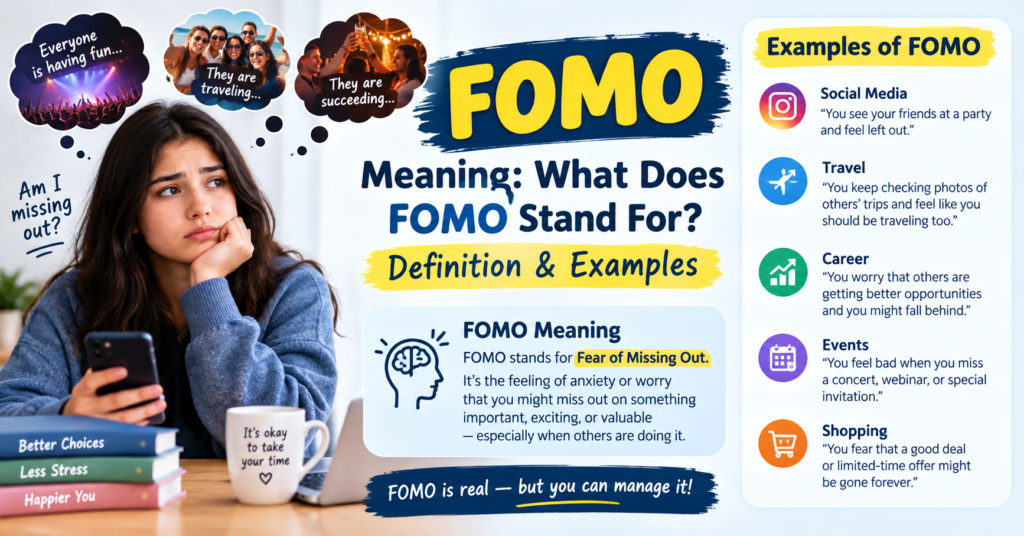
FOMO stands for “Fear Of Missing Out.” It is a common feeling in today’s world. Many people feel it when they see others doing fun things. Social media has made this feeling much stronger.FOMO means you worry that others are having a better time than you. You see photos or videos of parties, trips, or events. You feel like you should be there too. This can make you feel sad, anxious, or left out.FOMO is not a new feeling. People have always worried about missing something good. But social media apps show us more of other people’s lives now. This makes FOMO feel bigger and more common than before.
What Does FOMO Mean in Simple Words?
In simple words, FOMO means the fear that other people are enjoying something good without you. It is that uneasy feeling you get when you think you are missing an event, a trend, or a fun moment. FOMO is an emotion, not a medical condition. It shows up as worry, restlessness, or sadness when you feel left out of something exciting.
Most people feel FOMO at some point. It can happen with small things, like missing a group chat joke, or bigger things, like skipping a friend’s trip. The feeling comes from comparing your life to what others seem to be doing.
FOMO Meaning in Texting and Social Media
In texting and online chats, FOMO is used as a short slang term. People write it in lowercase or uppercase, and it fits naturally into casual conversation. Here are common ways it appears:
- “I have major FOMO after seeing your vacation photos.”
- “Not going to lie, I have FOMO about missing the concert.”
- “Don’t let FOMO stop you from resting tonight.”
On social media, FOMO is tied directly to the way apps are built. Feeds show highlight reels of parties, travel, and achievements. This constant stream of updates makes FOMO a daily experience for many users, especially on platforms like Instagram, Snapchat, and TikTok.
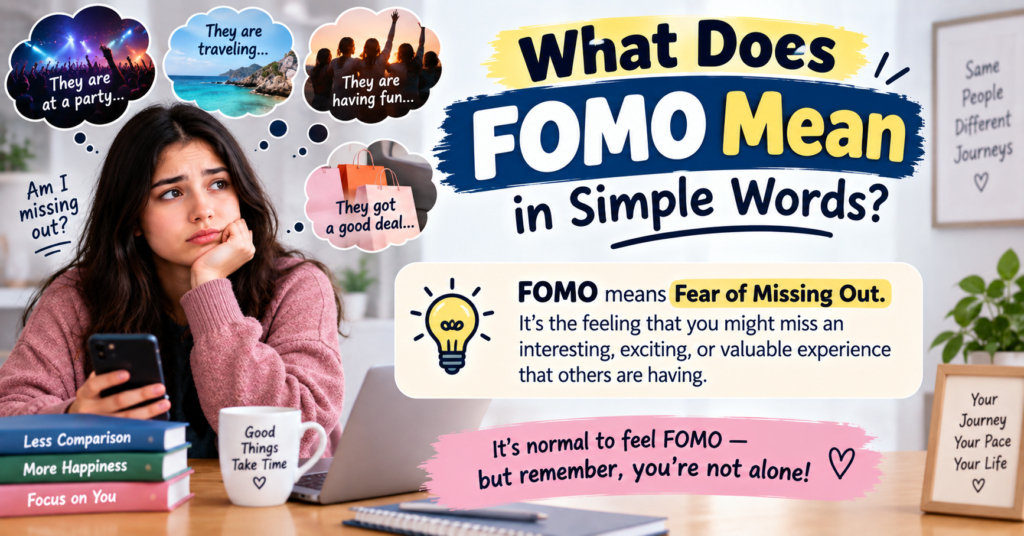
What Does FOMO Stand For?
FOMO stands for Fear Of Missing Out. The term was first used online in the early 2000s and later added to major dictionaries such as the Oxford English Dictionary in 2013. It describes the anxious feeling that an enjoyable event may be happening somewhere else, often triggered by posts on social media.
| Letter | Stands For |
|---|---|
| F | Fear |
| O | Of |
| M | Missing |
| O | Out |
FOMO Meaning in Relationships
FOMO does not only apply to parties or trends. It also shows up in relationships. A person may feel FOMO if:
- They wonder if a single life would be more exciting than a committed one.
- They see a partner’s ex or friend group having fun without them.
- They worry about missing out on other romantic options.
In relationships, FOMO can create doubt, jealousy, or restlessness. It may cause someone to compare their relationship to others they see online, even when their own relationship is healthy and stable. Recognizing this pattern helps couples talk openly instead of letting quiet comparison build up.
FOMO Meaning in Psychology
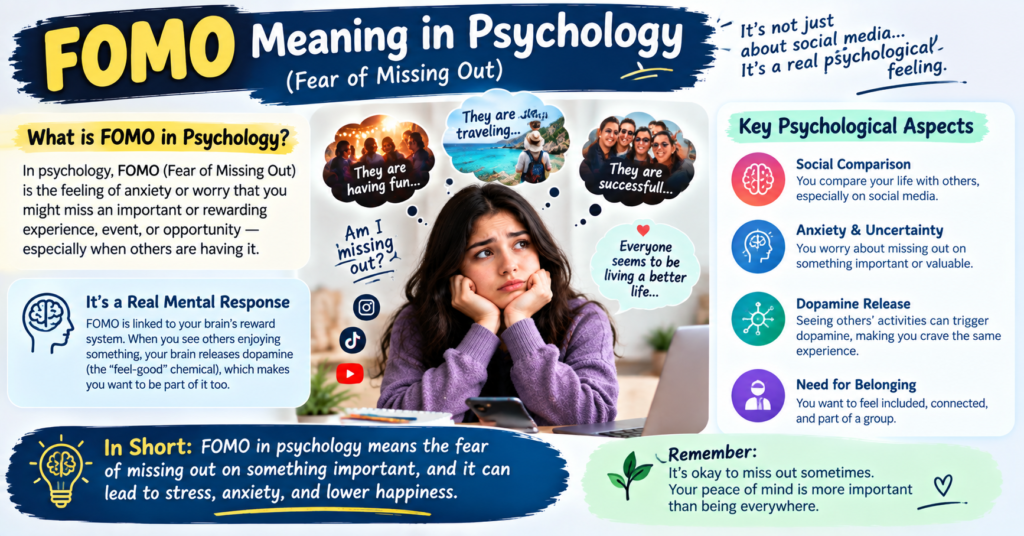
In psychology, FOMO is described as a form of social anxiety. Researchers link it to two basic human needs: the need for social connection and the need to feel included. When these needs feel unmet, the brain reacts with worry and restlessness.
Studies suggest people with lower self-esteem or higher social anxiety are more likely to experience strong FOMO. It is also connected to compulsive phone checking, since people feel pressure to stay updated on what others are doing at all times. Psychologists note that FOMO can affect mood, sleep, and focus if it is not managed well.
Common Examples of FOMO in Everyday Life
FOMO shows up in many ordinary situations. Some common examples include:
- Checking social media right after waking up to see what you missed overnight.
- Feeling anxious when friends post photos from an event you skipped.
- Buying something during a flash sale just because it feels limited or urgent.
- Joining every group chat or online trend out of fear of being left out.
- Feeling restless at home while imagining friends are out having fun.
- Constantly comparing your career or lifestyle to influencers online.
These small moments add up. Over time, they can shape how a person spends their time, money, and energy.
FOMO vs JOMO: What’s the Difference?
JOMO stands for Joy Of Missing Out. It is the opposite mindset of FOMO. Instead of fearing what you might miss, JOMO is about being content with staying home, saying no, or unplugging from social media without guilt.
| Feature | FOMO | JOMO |
|---|---|---|
| Full Form | Fear Of Missing Out | Joy Of Missing Out |
| Feeling | Anxiety, restlessness | Peace, contentment |
| Focus | What others are doing | What you personally want |
| Social Media Use | Often increases FOMO | Often reduces stress from social media |
| Mindset | Comparison-based | Self-based |
Many wellness experts encourage practicing more JOMO as a way to protect mental health and enjoy quiet time without guilt.
How Social Media Can Cause FOMO
Social media platforms are designed to keep users scrolling, and this design plays a direct role in causing FOMO. Here is how it happens:
- Highlight reels: People usually post their best moments, not everyday life, which creates a false sense that others are always having more fun.
- Constant updates: Stories and live posts create pressure to check in often so you do not miss anything.
- Social comparison: Seeing likes, comments, and follower counts can make users feel like they are falling behind.
- Fast-moving trends: Viral challenges and trending topics make people feel they must join in quickly before it fades.
Because of these design patterns, even short amounts of scrolling can trigger comparison and anxiety, especially among teens and young adults who use these platforms daily.
How to Deal With FOMO
FOMO can be managed with small, practical habits. Try the following steps:
- Limit social media time. Set daily limits so scrolling does not turn into constant comparison.
- Practice gratitude. Focus on what you have instead of what you might be missing.
- Unfollow triggering accounts. If certain accounts make you feel anxious often, mute or unfollow them.
- Plan your own experiences. Fill your time with activities you genuinely enjoy instead of chasing trends.
- Turn off notifications. Reducing alerts lowers the urge to check apps constantly.
- Talk about it. Sharing your feelings with a friend or therapist can reduce the pressure FOMO creates.
Small, consistent changes in daily habits usually work better than trying to quit social media completely overnight.
Is FOMO a Good or Bad Thing?
FOMO is not always negative. In small amounts, it can push people to try new things, stay socially active, or take healthy chances. However, when FOMO becomes constant, it can lead to stress, poor sleep, low self-esteem, and overspending.
The key difference lies in balance. Occasional FOMO that motivates you is normal. Frequent FOMO that controls your mood, choices, or spending is worth addressing through healthier social media habits and self-awareness.
Frequently Asked Questions About FOMO Meaning
What does FOMO mean in texting?
In texting, FOMO means “Fear Of Missing Out.” It is used casually to describe feeling anxious about missing an event or trend.
What does FOMO stand for?
FOMO stands for Fear Of Missing Out, a term describing anxiety over missing enjoyable experiences that others are having.
Why do people experience FOMO?
People experience FOMO due to social comparison, the need for connection, and constant exposure to others’ highlight moments on social media.
How can I overcome FOMO?
You can overcome FOMO by limiting social media use, practicing gratitude, and focusing on your own goals instead of comparing yourself to others.